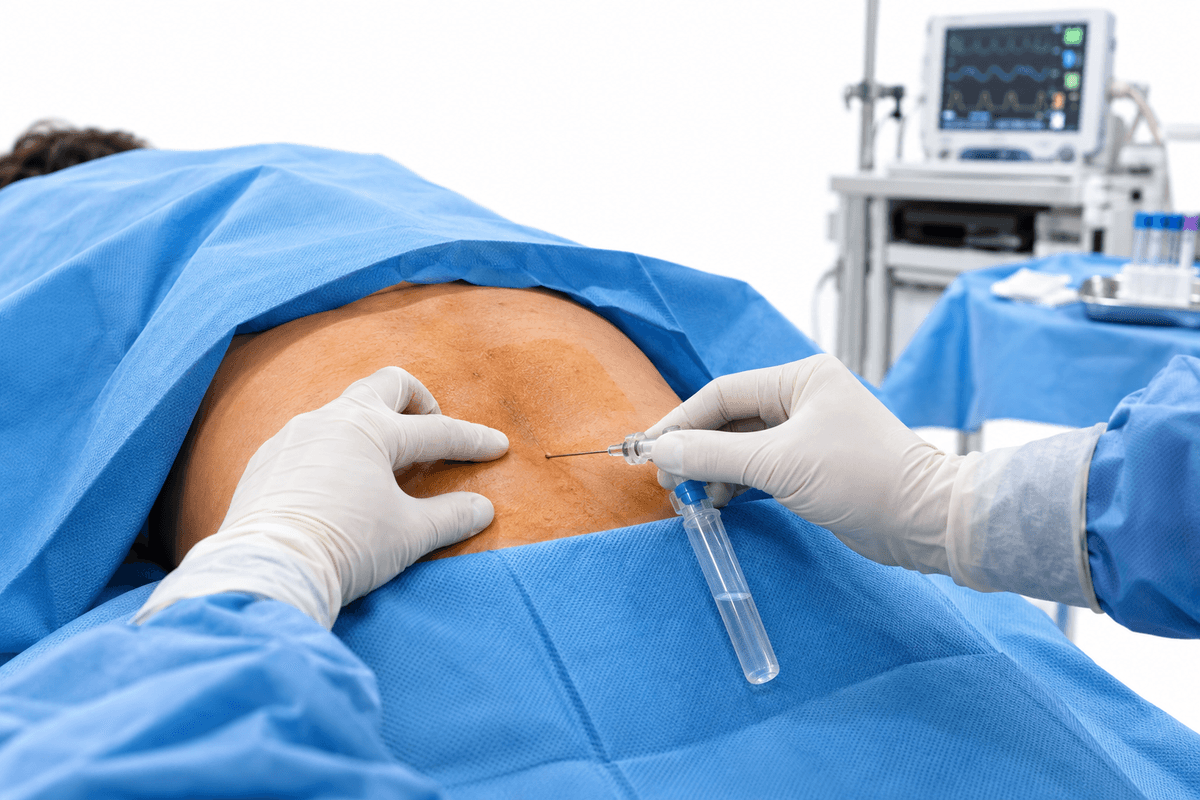
Performed by Dr. Venkata Harin Reddy Muduganti at Dr Venkata Harin Reddy
Lumbar puncture, also known as spinal tap, is a diagnostic procedure performed in Hyderabad to collect cerebrospinal fluid (CSF) for analyzing neurological conditions such as meningitis, multiple sclerosis, and subarachnoid hemorrhage. The procedure involves inserting a thin needle between lumbar vertebrae to safely extract CSF samples for laboratory testing. Dr Venkata Harin Reddy Muduganti performs this specialized procedure with precision and patient comfort as top priorities.
We believe in honest, upfront disclosure so you can make an informed decision.
A step-by-step look at what happens during this procedure.
The patient lies on their side in a curled position or sits leaning forward to widen the spaces between lumbar vertebrae, making needle insertion easier and safer.
The skin and deeper tissues in the lower back are numbed using local anesthetic to minimize discomfort during needle insertion.
A thin, hollow spinal needle is carefully inserted between the L3-L4 or L4-L5 vertebrae into the subarachnoid space where cerebrospinal fluid flows.
Cerebrospinal fluid is collected drop by drop into sterile tubes for laboratory analysis including cell count, protein, glucose, and culture tests.
The needle is removed, pressure is applied to prevent bleeding, and the patient rests in a reclined position to minimize post-procedure headache risk.
A structured, patient-first approach from first consultation to full recovery.
Dr Venkata Harin Reddy conducts thorough neurological examination and reviews imaging studies to determine the necessity and safety of lumbar puncture for each patient.
When needed, fluoroscopy or ultrasound guidance is utilized to ensure precise needle placement, particularly in patients with anatomical variations or previous spinal surgery.
Dr Muduganti employs gentle technique with adequate local anesthesia and continuous patient communication throughout the procedure to minimize anxiety and discomfort.
Collected CSF samples are immediately processed with priority laboratory testing to ensure quick diagnosis and timely treatment decisions for urgent neurological conditions.
What to expect at each stage of your recovery journey.
Patient remains lying flat or with head slightly elevated for 1-2 hours to reduce headache risk. Vital signs are monitored and fluids are encouraged to promote CSF replenishment.
Adequate rest is recommended with continued hydration. Mild analgesics may be prescribed for back discomfort. Patients should avoid strenuous activities and heavy lifting during this period.
Most patients resume normal activities within 24-48 hours. Any persistent headache, fever, or neurological symptoms should be reported immediately to Dr Venkata Harin Reddy for evaluation.
Lumbar puncture provides definitive diagnosis for conditions like meningitis, encephalitis, multiple sclerosis, and subarachnoid hemorrhage, enabling targeted treatment strategies.
In cases of elevated intracranial pressure or pseudotumor cerebri, removal of excess CSF provides immediate symptom relief including reduced headaches and improved vision.
CSF analysis results directly inform treatment choices, from antibiotic selection in infections to immunotherapy decisions in autoimmune neurological disorders.
Detection of malignant cells in CSF helps stage cancers affecting the nervous system and monitors treatment response in patients with known CNS malignancies.
Let's clear up some of the most common myths about lumbar puncture (spinal tap).
Get a personalised assessment from an experienced specialist. Understand your options, ask your questions, and decide with confidence.