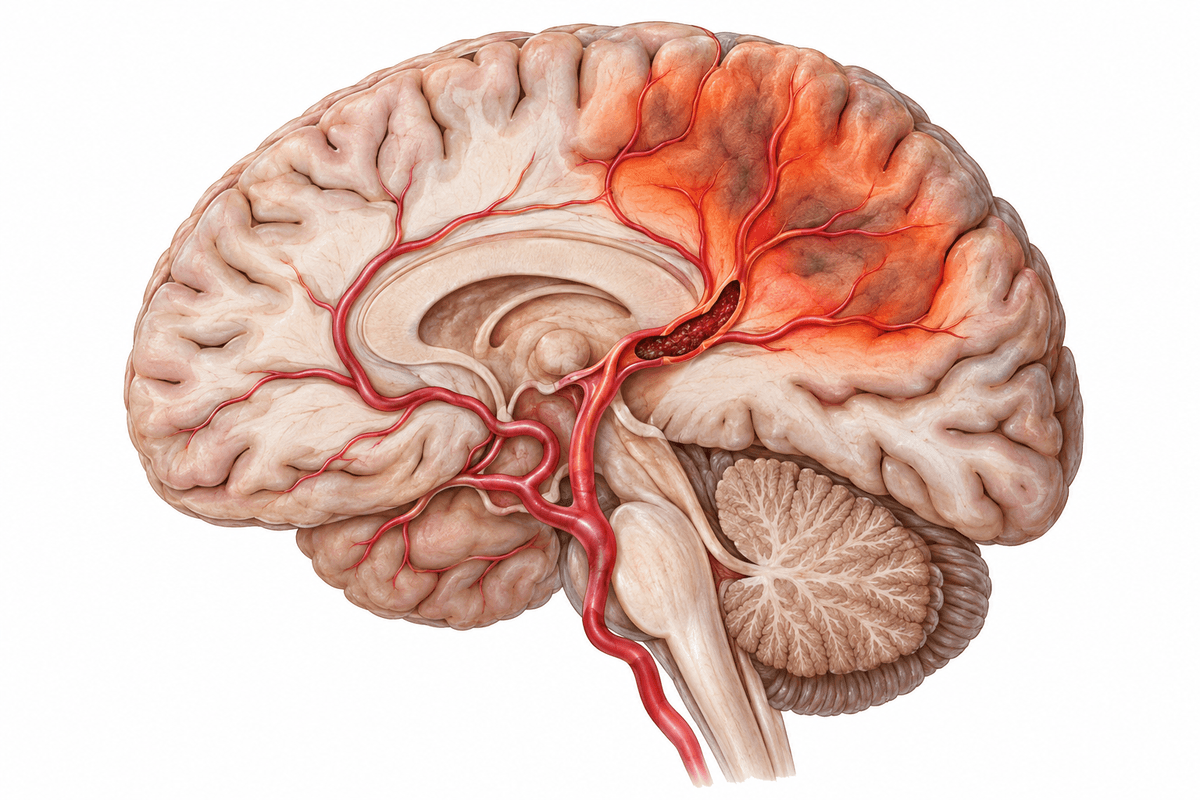
Treated by Dr. Venkata Harin Reddy Muduganti at Dr Venkata Harin Reddy
Stroke is a medical emergency occurring when blood flow to the brain is interrupted, causing brain cells to die within minutes. In Hyderabad, timely recognition and treatment are critical to minimizing permanent damage and improving recovery outcomes. Dr Venkata Harin Reddy Muduganti provides comprehensive stroke care with rapid assessment, acute management, and long-term rehabilitation support for patients across the region.
The most common type accounting for approximately 87% of all strokes, caused by a blocked artery that prevents blood flow to the brain, typically due to blood clots or atherosclerotic plaque buildup in the vessels.
Occurs when a blood vessel in the brain ruptures or leaks, causing bleeding into or around the brain tissue, often resulting from high blood pressure, aneurysms, or vascular malformations with higher mortality rates.
Often called a mini-stroke, this temporary blockage of blood flow causes stroke-like symptoms that resolve within 24 hours, serving as a critical warning sign that requires immediate medical attention to prevent a full stroke.
Multiple factors can contribute to the development and progression of this condition.
Stroke develops gradually. Recognising symptoms early gives you more treatment options.
From conservative to surgical — we always start with the least invasive option first.
A structured, patient-first approach from first visit to full recovery.
Dr Venkata Harin Reddy performs immediate neurological examination using standardized stroke scales, determines stroke onset time, and orders urgent brain imaging (CT or MRI) to differentiate ischemic from hemorrhagic stroke, enabling time-critical treatment decisions within minutes of patient arrival.
Based on imaging results and eligibility criteria, Dr Muduganti administers appropriate acute interventions including thrombolytic therapy for eligible ischemic stroke patients, coordinates mechanical thrombectomy when indicated, or manages hemorrhagic strokes with blood pressure control and surgical consultation as needed.
Dr Venkata Harin Reddy identifies and addresses underlying causes through detailed cardiac evaluation, vascular imaging, and laboratory testing, then develops personalized prevention strategies including blood pressure control, diabetes management, cholesterol reduction, and anticoagulation therapy to prevent recurrent strokes.
Dr Muduganti coordinates individualized rehabilitation programs involving physiotherapy, occupational therapy, speech therapy, and neuropsychological support, monitoring recovery progress through regular follow-up assessments and adjusting treatment plans to optimize functional outcomes and quality of life for each patient.
What to expect at each phase of recovery.
Close monitoring in stroke unit or intensive care with frequent neurological assessments, management of complications such as brain swelling or seizures, early mobilization to prevent bed-related complications, and initiation of basic rehabilitation activities while medical condition stabilizes.
Intensive therapy programs targeting mobility, self-care skills, communication, and cognitive functions with measurable improvement goals, medication optimization for secondary prevention, patient and family education about stroke recovery, and gradual transition from hospital to outpatient or home-based rehabilitation settings.
Continued outpatient therapy focusing on maximizing independence and community reintegration, ongoing medication management and risk factor control, regular neurological follow-ups to monitor for complications or recurrence, psychological support for emotional adjustment, and lifestyle modifications to support sustained recovery and stroke prevention.
When treated within the critical time window with thrombolysis or thrombectomy, many patients achieve complete or near-complete recovery with minimal residual deficits, returning to independent living and previous activities with appropriate secondary prevention measures in place.
Patients typically regain ability to perform daily activities independently despite some persistent neurological deficits such as mild weakness or speech difficulties, often returning home with outpatient therapy support and adaptive strategies to compensate for remaining impairments.
Some patients experience significant improvement but continue to have moderate disabilities affecting mobility, communication, or cognition, requiring ongoing rehabilitation, assistive devices, caregiver support, and home modifications to maintain quality of life and maximize remaining functional abilities.
Even in cases with substantial initial deficits, comprehensive stroke care by Dr Venkata Harin Reddy minimizes complications, prevents secondary brain injury, reduces recurrence risk through aggressive risk factor management, and provides compassionate support for patients and families throughout the recovery journey.
Untreated stroke leads to irreversible brain damage with permanent disability including paralysis, speech loss, cognitive impairment, and loss of independence in daily activities. Brain cells die rapidly without blood flow, and the damage expands over time, significantly reducing chances of recovery. Without proper secondary prevention, stroke survivors face dramatically increased risk of recurrent strokes, each potentially more severe than the last.
Seek immediate emergency care at the first sign of stroke symptoms including sudden facial drooping, arm weakness, or speech difficulty, as every minute counts for brain preservation and treatment effectiveness. Do not wait to see if symptoms resolve, as even temporary symptoms (TIA) require urgent evaluation to prevent a complete stroke. Contact Dr Venkata Harin Reddy for post-stroke follow-up care, stroke risk assessment if you have multiple risk factors, or if you experience any concerning neurological symptoms.
Early treatment means more options and better outcomes. Book a consultation to understand your condition and explore the right path forward.