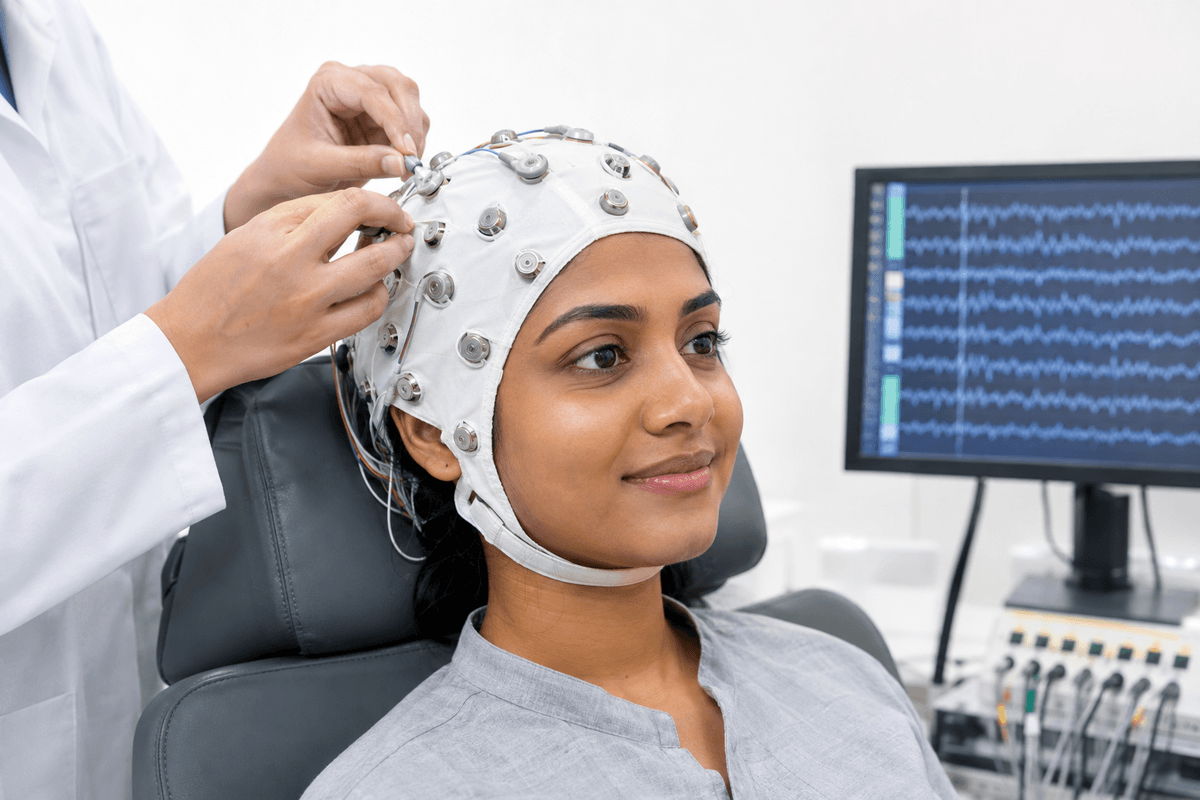
Performed by Dr. Venkata Harin Reddy Muduganti at Dr Venkata Harin Reddy
An Electroencephalogram (EEG) in Hyderabad is a non-invasive diagnostic test that records electrical activity in the brain to help identify neurological conditions such as epilepsy, seizures, sleep disorders, and brain injuries. The test uses small electrodes attached to the scalp to detect brain wave patterns and abnormalities. Dr Venkata Harin Reddy Muduganti, an experienced Neuro Physician, provides comprehensive EEG testing with precise interpretation for accurate diagnosis and treatment planning.
We believe in honest, upfront disclosure so you can make an informed decision.
A step-by-step look at what happens during this procedure.
Small metal discs (electrodes) are attached to the scalp using conductive paste or gel at specific locations following the international 10-20 system to ensure standardized brain mapping.
The electrodes detect electrical signals produced by brain cells and transmit them to an amplifier that magnifies the signals for recording and analysis.
Brain activity is recorded while the patient rests quietly with eyes closed and open to establish normal baseline patterns and identify any abnormalities.
The patient may be asked to perform specific tasks like hyperventilation, photic stimulation with flashing lights, or sleep to provoke abnormal brain activity that may not be visible at rest.
The neurophysiologist reviews the recorded brain wave patterns to identify abnormalities such as spikes, sharp waves, or slowing that indicate specific neurological conditions.
A structured, patient-first approach from first consultation to full recovery.
Dr Venkata Harin Reddy begins with a detailed medical history and neurological examination to determine the specific type of EEG required and any special protocols needed for accurate diagnosis.
Our clinic utilizes advanced digital EEG systems with high-resolution recording capabilities and artifact reduction technology to ensure the most accurate and reliable brain wave monitoring.
Dr Venkata Harin Reddy personally analyzes all EEG recordings with specialized training in neurophysiology, ensuring precise identification of abnormalities and correlation with clinical symptoms.
Based on EEG findings, Dr Venkata Harin Reddy develops individualized treatment strategies and provides detailed explanations to patients and families about the results and next steps in care.
What to expect at each stage of your recovery journey.
Patients can resume normal activities immediately after the EEG. Any electrode gel can be washed out with regular shampooing. There is no recovery period required as the test is completely non-invasive.
Dr Venkata Harin Reddy will review the EEG findings with the patient, explaining the brain wave patterns observed and their clinical significance. Any questions about the diagnosis or treatment options will be addressed comprehensively.
Based on EEG results, follow-up appointments may be scheduled for treatment initiation, medication adjustments, or repeat testing. Long-term monitoring plans are established for conditions requiring ongoing assessment.
EEG provides definitive identification of epilepsy types, seizure disorders, and other neurological conditions, enabling targeted treatment approaches with improved outcomes.
Monitoring brain wave patterns helps assess medication effectiveness and guides dosage adjustments, leading to better seizure control and reduced side effects.
For patients with drug-resistant epilepsy, EEG helps localize seizure foci to determine suitability for surgical intervention and predict surgical success rates.
EEG findings provide valuable prognostic information for various neurological conditions, helping patients and families understand expected outcomes and plan appropriate care strategies.
Let's clear up some of the most common myths about electroencephalogram (eeg).
Get a personalised assessment from an experienced specialist. Understand your options, ask your questions, and decide with confidence.