Performed by Dr. Venkata Harin Reddy Muduganti at Dr Venkata Harin Reddy
Evoked Potentials testing including VEP, SSEP, and BERA in Hyderabad provides comprehensive assessment of nerve pathway function through visual, sensory, and auditory stimuli. These non-invasive diagnostic procedures help evaluate the integrity of neural pathways from sensory organs to the brain, detecting abnormalities that may not appear on standard imaging. Dr Venkata Harin Reddy specializes in performing and interpreting these advanced neurophysiological tests with precision and expertise.
We believe in honest, upfront disclosure so you can make an informed decision.
A step-by-step look at what happens during this procedure.
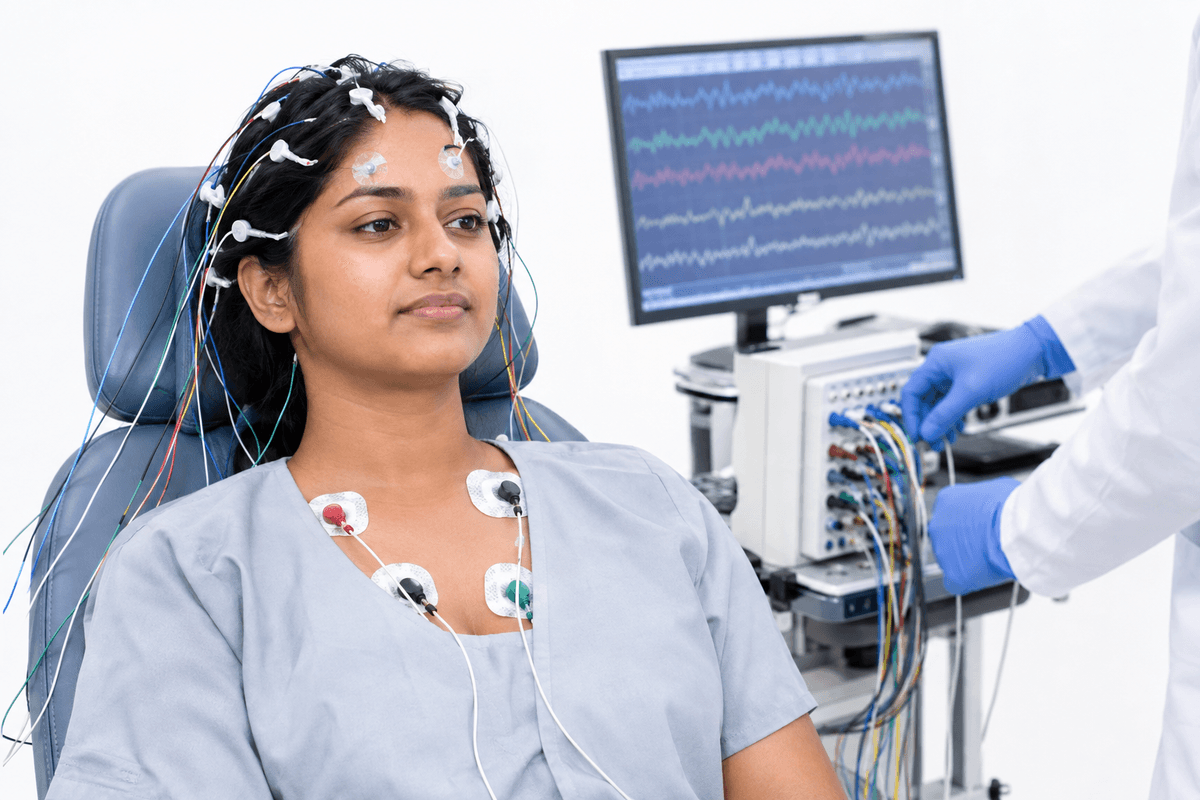
Small electrodes are attached to the scalp, earlobes, or specific body locations depending on the test type. These sensors record electrical activity generated by the nervous system in response to controlled stimuli.
For VEP, visual patterns are displayed; for SSEP, mild electrical pulses stimulate nerves; for BERA, clicking sounds are presented through headphones. Each stimulus triggers a predictable neural response that travels through specific pathways.
The electrodes detect tiny electrical signals generated as the stimulus travels through nerve pathways to the brain. These responses are measured in milliseconds and microvolts, capturing the speed and strength of neural transmission.
Sophisticated computer systems amplify the weak electrical signals thousands of times while filtering out background noise. Multiple stimuli are averaged together to create clear, reproducible waveforms that represent nerve pathway function.
The resulting waveforms are analyzed for latency (timing), amplitude (strength), and morphology (shape). Deviations from normal patterns indicate specific locations and types of neurological dysfunction, enabling precise diagnosis.
A structured, patient-first approach from first consultation to full recovery.
Dr Venkata Harin Reddy conducts a thorough neurological assessment and reviews your medical history to determine which evoked potential tests are most appropriate for your symptoms and to establish baseline expectations for your individual case.
Using advanced neurophysiological equipment, Dr Reddy personally oversees electrode placement and stimulus calibration to ensure optimal signal quality. His expertise in neurophysiology ensures accurate data collection with minimal patient discomfort throughout the testing process.
Dr Reddy analyzes the evoked potential waveforms with specialized training in neurophysiology, comparing your results against normative data while considering your clinical presentation. This expertise allows identification of subtle abnormalities that may indicate early neurological disease.
Following the procedure, Dr Reddy explains your test results in clear terms, correlating findings with your symptoms and recommending appropriate treatment or additional investigations. You receive a comprehensive report with actionable insights for your neurological care.
What to expect at each stage of your recovery journey.
You can resume normal activities immediately after testing. The electrodes leave no marks, though mild scalp sensitivity may occur where paste was applied. Any eye fatigue from VEP or mild stimulation sensations from SSEP resolve within minutes.
Return to work, driving, and all regular activities without restriction. You may wash your hair to remove any residual electrode paste. There are no dietary restrictions or activity limitations following evoked potential testing.
Dr Reddy will schedule a follow-up appointment to discuss detailed results and treatment recommendations based on findings. Additional investigations or specialist referrals may be arranged if abnormalities are detected requiring further evaluation or intervention.
Evoked potential testing provides objective evidence of nerve pathway dysfunction, enabling precise diagnosis of conditions like multiple sclerosis, optic neuritis, acoustic neuroma, and spinal cord lesions that may not be apparent on imaging studies alone.
These sensitive tests can identify subclinical neurological abnormalities before symptoms become severe, allowing earlier intervention and potentially better treatment outcomes. This is particularly valuable in conditions like MS where early treatment modifies disease progression.
Serial evoked potential testing tracks disease progression and treatment response objectively, helping your neurologist adjust medications or therapies based on quantifiable nerve function changes rather than subjective symptom reporting alone.
For patients requiring neurosurgery or spinal procedures, evoked potentials establish baseline nerve function and can be used during surgery to monitor neural integrity, reducing the risk of iatrogenic nerve damage during delicate operations.
Let's clear up some of the most common myths about evoked potentials (vep, ssep and bera).
Get a personalised assessment from an experienced specialist. Understand your options, ask your questions, and decide with confidence.